

Interview: Phoebe Tran on Bánh and Building the World of Bé Bếp
The chef and artist talks about the expansive world of Vietnamese cuisine, including its "dumplings."
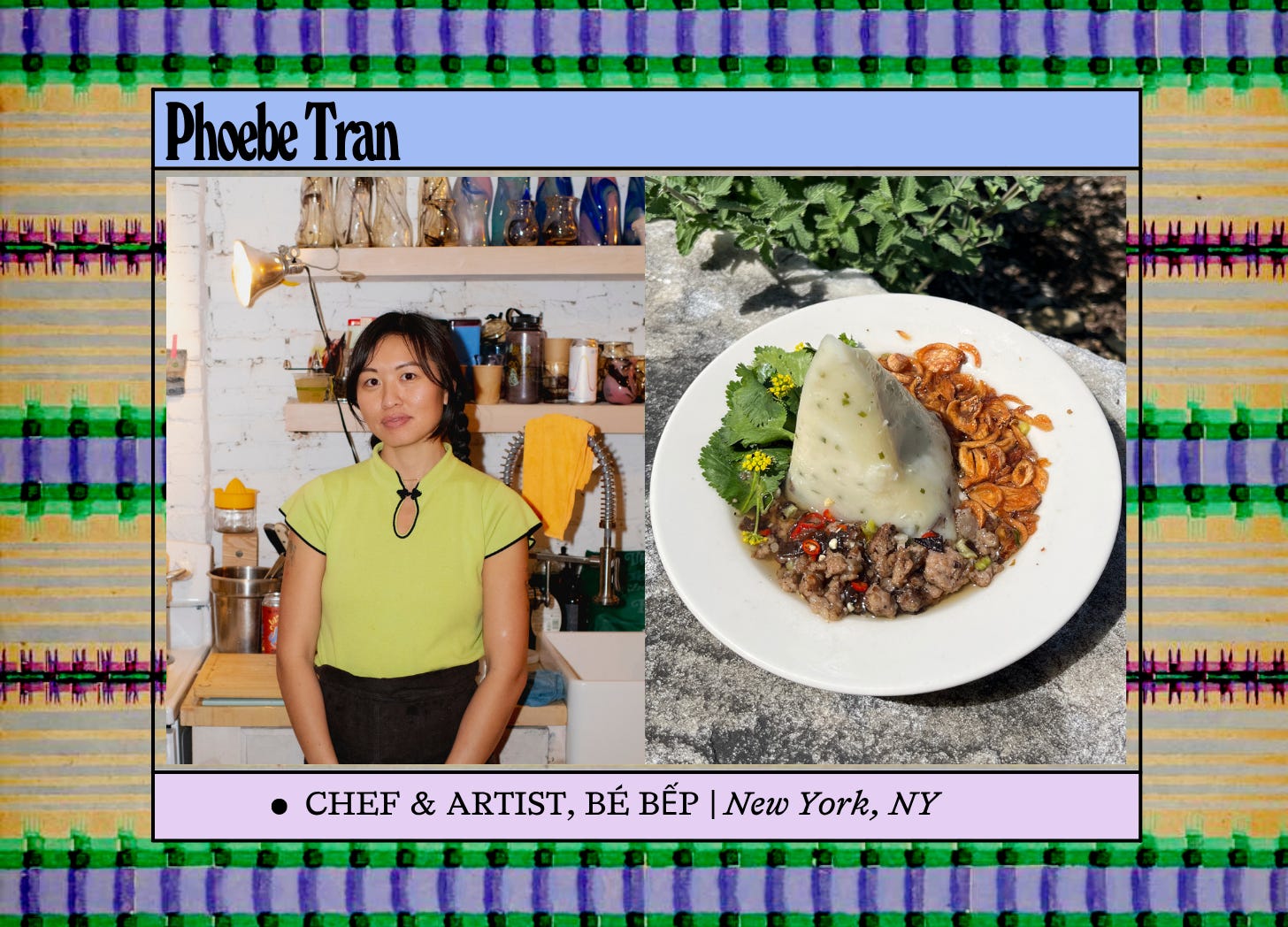
Over the course of the last couple of years, Vietnamese cuisine has had a renaissance of sorts in North America and Western society at large. Beyond phở, bánh mì, and fresh spring rolls, many people’s culinary vocabularies have now expanded to include noodle soups bún bò huế and bún riêu, cold rice noodle dish bún thịt nướng, and street food fave bánh xèo. But Phoebe Tran knows that this is merely the tip of the iceberg when it comes to understanding the food and culture of her motherland.
“The Vietnam that I grew up with was largely the Southern diaspora that were all refugees after the war, and I think that that that is largely what a lot of people think of when they think of Vietnamese food in America,” Tran explains. “But I think there’s just so much more work to be done to grow the conversation.”
One look at the chef and artist’s Instagram page for her project, Bé Bếp (@bebep.babykitchen) and you’ll get a glimpse of Vietnamese food like you’ve never seen before, and names of dishes you don’t typically see on the menus of most restaurants. Some of these dishes are what we here at Above the Fold would consider, by our wide definition, as dumplings (e.g. the bánh gìo we featured on our Instagram page).
But Bé Bếp, which literally means “little kitchen” or “baby kitchen,” goes beyond its pop-ups, dinners, and food delivery series. It’s a culinary, artistic, and healing practice that is constantly evolving, just as Tran does.
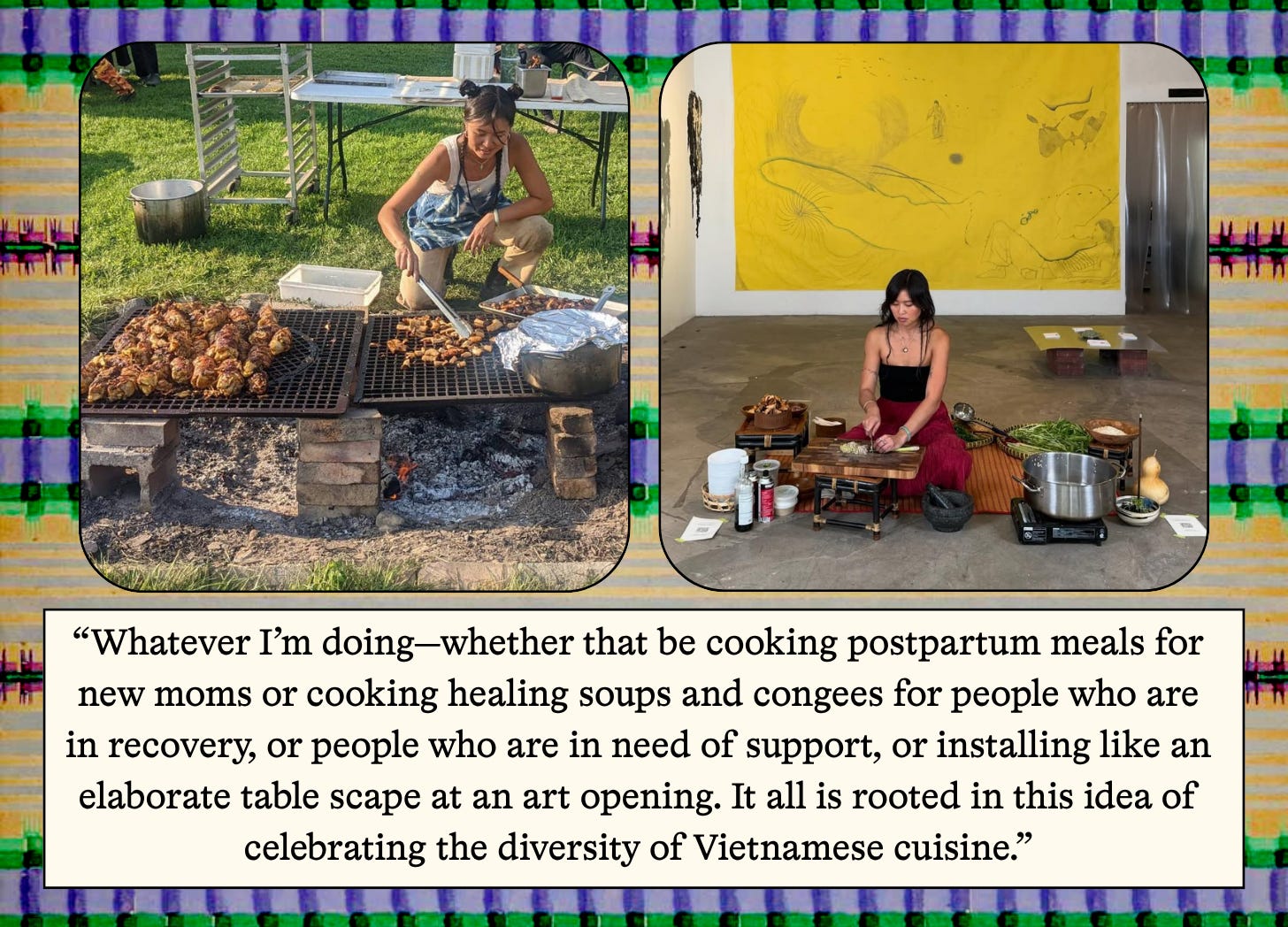
“I see it as sort of like a living breathing thing,” she says. “It has allowed me to expand upon the ideas and the philosophies that I have around Vietnamese food, but also storytelling and world-building through the lens of whatever I’m doing—whether that be cooking postpartum meals for new moms or cooking healing soups and congees for people who are in recovery, or people who are in need of support, or installing like an elaborate table scape at an art opening. It all is rooted in this idea of celebrating the diversity of Vietnamese cuisine.”
Below, Tran talks to us about her practice, the challenge of finding her favorite Vietnamese “dumpling” in New York, and the vast world of Vietnamese cuisine.
Jasmine Ting: How would you describe the lens through which Bé Bếp views Vietnamese cuisine?
Phoebe Tran: As someone who is part of the Vietnamese diaspora in the U.S. and as someone who regularly travels back to Vietnam, I’m always sort of questioning what it means to know and understand and deepen my understanding of my heritage. But I also want to be able to apply what I’m learning in a way that feels true to the landscape that I’m living in.
And, in New York, you’re living in a completely different climate than Southeast Asian climate. You can’t really grow the same types of ingredients. So when it comes to approaching menus and food seasonally and medicinally, it’s just a very different way of thinking. I think about it a lot through the lens of farming. Because of my background in herbalism, I also think a lot about what my body needs, or maybe what other people are sort of like going through, and transitions between different seasons, different phases of life.
Right, because it’s kind of easy to fall into this trap of trying to bring something from one country exactly as it is to another, even when the context is completely different.
It kind of goes back to like this this conversation around authenticity. The dishes that I’m serving at my pop-ups are all inspired by and built upon the the foundations of a traditional Vietnamese dish, but I incorporate different cooking techniques and seasonal ingredients to the point where it might taste like a Vietnamese dish, but it looks very different. Or the format is completely different, and the experience of eating it is very different, but I still view it as Vietnamese food. It’s all a dialog or an evolution, really, that really considers place and time.
Can you speak more about your R&D process when it comes to creating dishes, menus, and experiences?
When I started Bé Bếp, I didn’t just start it as a meal delivery service, I was also farming. I was doing both at the same time, and really considering just how to incorporate different seasonal plants into my cooking, and what types of plants sort of recalled the similar textures and flavors of Vietnamese ingredients that I knew, but might not grow naturally in this climate. I think that has always informed my cooking since starting Bé Bếp, seasonality and herbs. And I think more and more as I’ve rooted myself in a more medicinal practice and approach to cooking for people, I think I’ve been trying to also bring more of that thinking into my cooking, and without coming off as like someone who’s cooking wellness food or someone who’s cooking food that’s just supposed to be good for you. I think food is equally as healing if it’s like something that you’re really enjoying.
How many times do you test a recipe before putting it on the menu?
I’ve been doing this for long enough where like I have certain foundational recipes that I can always build off of, and while I document my recipes as much as possible, I simply just don’t have the time to be in the kitchen the week before for recipe testing. It’s usually in the moment, to be honest. I think the thing with pop-ups in particular is that there’s such a learning curve with entering a completely new kitchen and new space, and having to figure out like what equipment’s there, what equipment’s not there, how to set up the kitchen in an efficient way. You’re learning as you go constantly and constantly having to problem solve and improve in the moment. But I’ll always bring back successful dishes and make small tweaks on them. So it also kind of feels like recipes are constantly getting better when I do them again.
I also see on Instagram that you’ve been gone to Vietnam quite a few times.
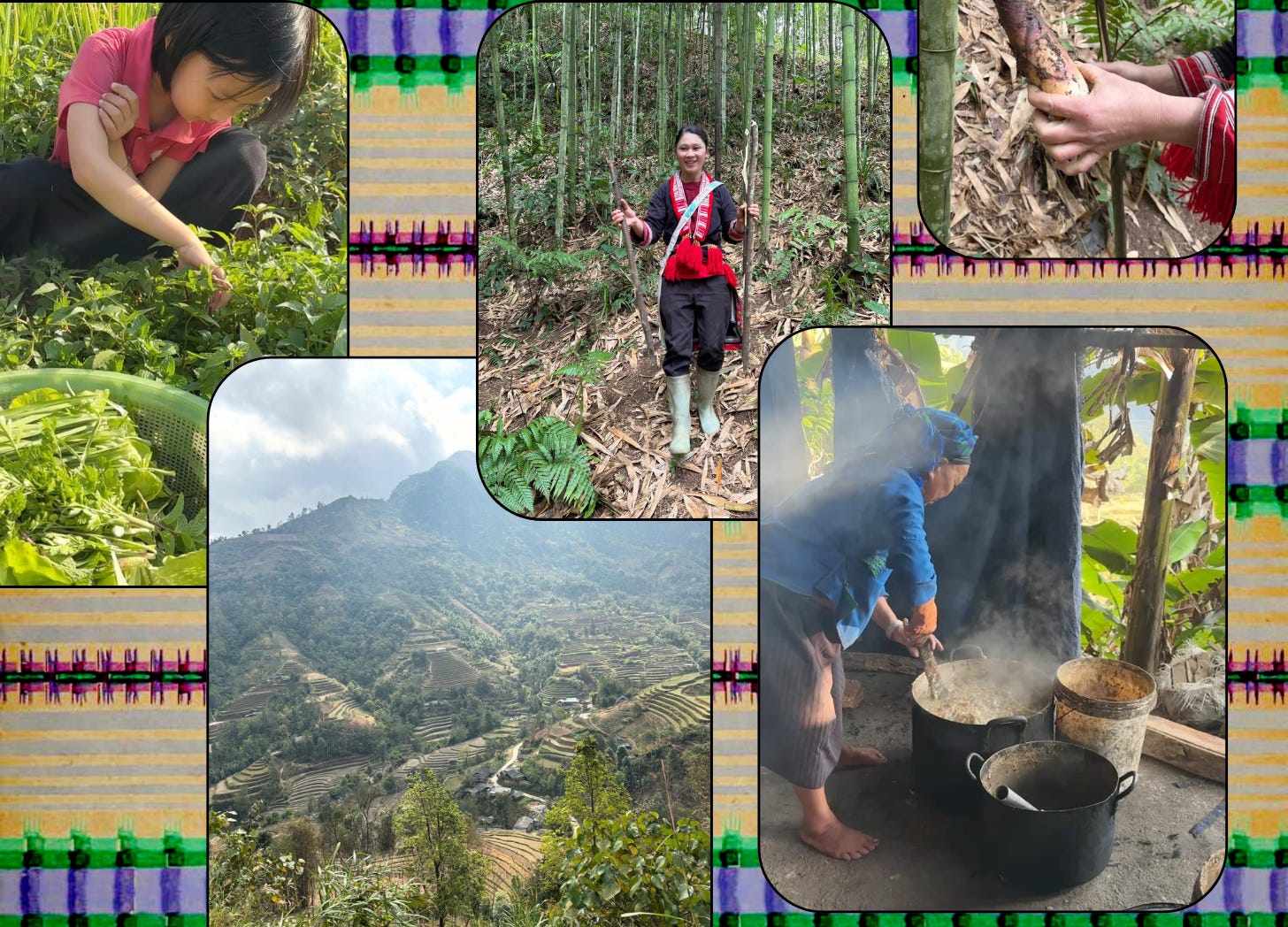
Part of the research is definitely going back to Vietnam. I really love traveling in the countryside, and have made an effort more and more within the past couple years to learn more about the Indigenous ethnic minorities of Vietnam. I’ve been learning more about their their food, their culture, and just understanding Vietnamese culture at large beyond what I’ve grown up with.
One of the reasons why we’re chatting now is because we wanted to share your bánh giò with our Above the Fold friends. Could you talk about what makes that particular recipe so special?
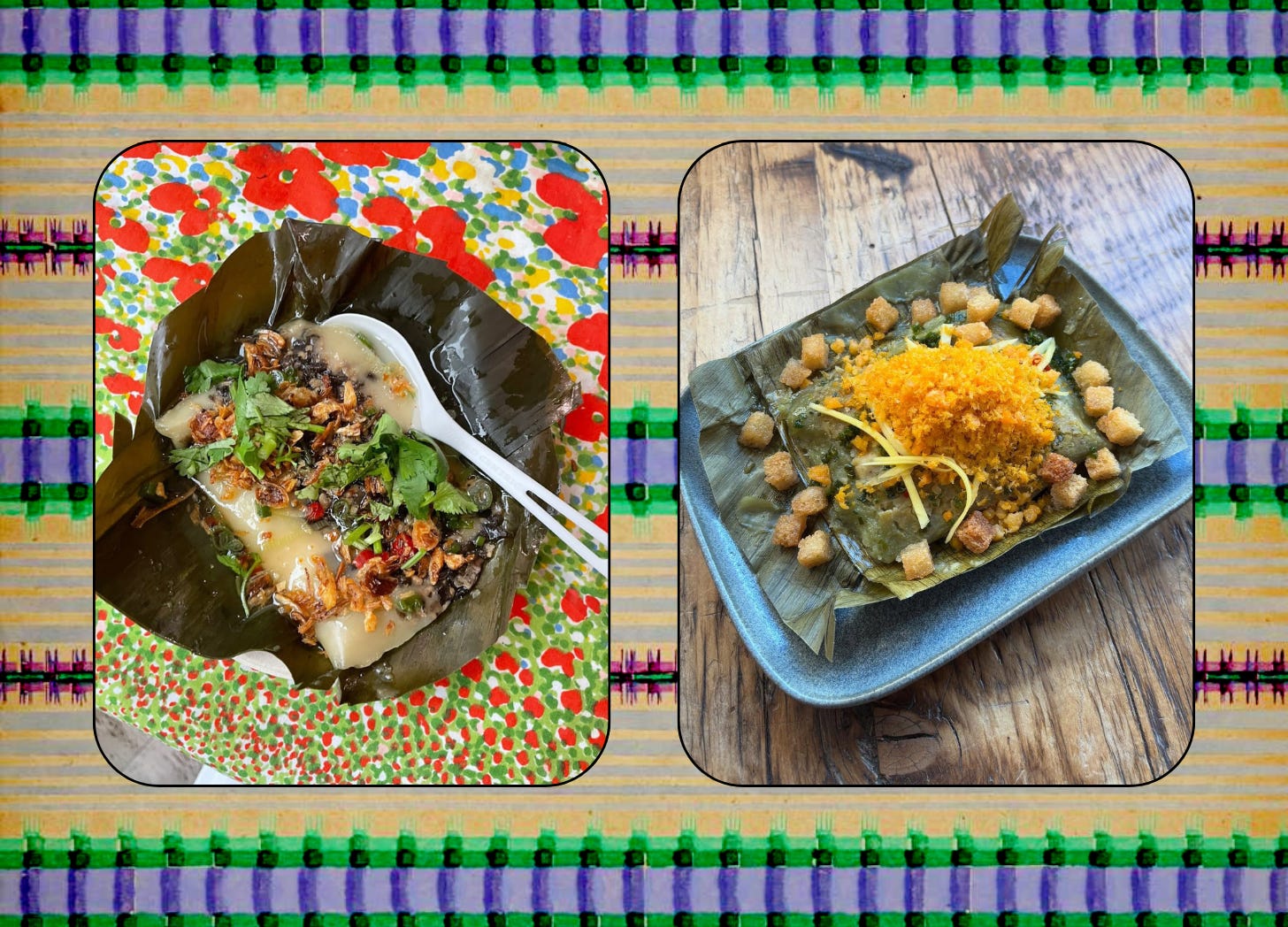
Bánh giò is a very simple food, and it’s often eaten as a light meal in Vietnam. That’s the beauty of it being encased in banana leaves, you can just hold it. Take it from the steamer, and eat the whole thing. It’s actually made from a cornstarch batter, and so it’s very, very light. But it can be made with rice batter sometimes, too.
I recently tested the recipe when I was at a residency in Vermont, and it was the first time that I tried to make it. I had always known that I had the recipe that my mom had written down, and I didn’t actually realize that she had sent that recipe via text a few months before she had passed away. It was really special to see that. And it’s a dish that she always really made at a large scale. I mean, you definitely can’t make dumplings at a small scale, but I just remember her spreading out all of her ingredients across the coffee table and watching her Vietnamese dramas and making it. It’s a recipe that reminds me of my mom.
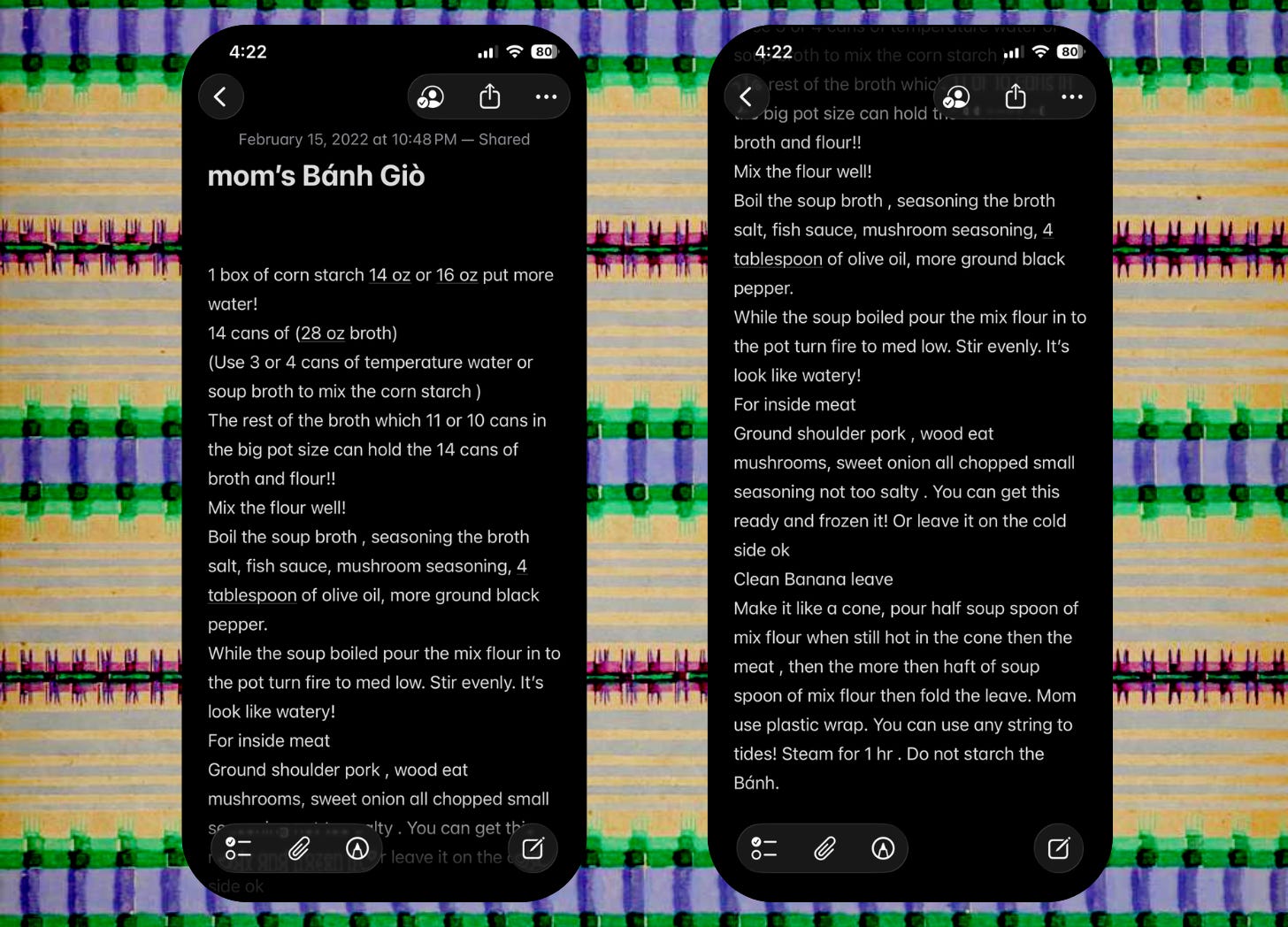
I think that it was also really fun for me to be able to try and make it. And actually, what motivated me to make it was also a viral Reel that I saw of this street vendor in Vietnam who was serving a really jiggly version of it. They were like serving it to a table, and it was just this wobbly pyramid, and I love that texture. I have this obsession with jelly and jelly-like textures in food.
What are some other Vietnamese dumplings—we have a more expansive view, so a spring roll or filled rice cake would live under the “dumpling” umbrella here—that you’ve made before?
I think the translation of Vietnamese dishes has always been something that I have a challenge with when it comes to writing menus. “Dumpling,” for example, has become such a universal term, but it’s a word that has is has roots in Chinese dishes. But the word “bánh” in Vietnamese often refers to either breads or what you would call dumplings. And my favorite dumplings come from the central region.
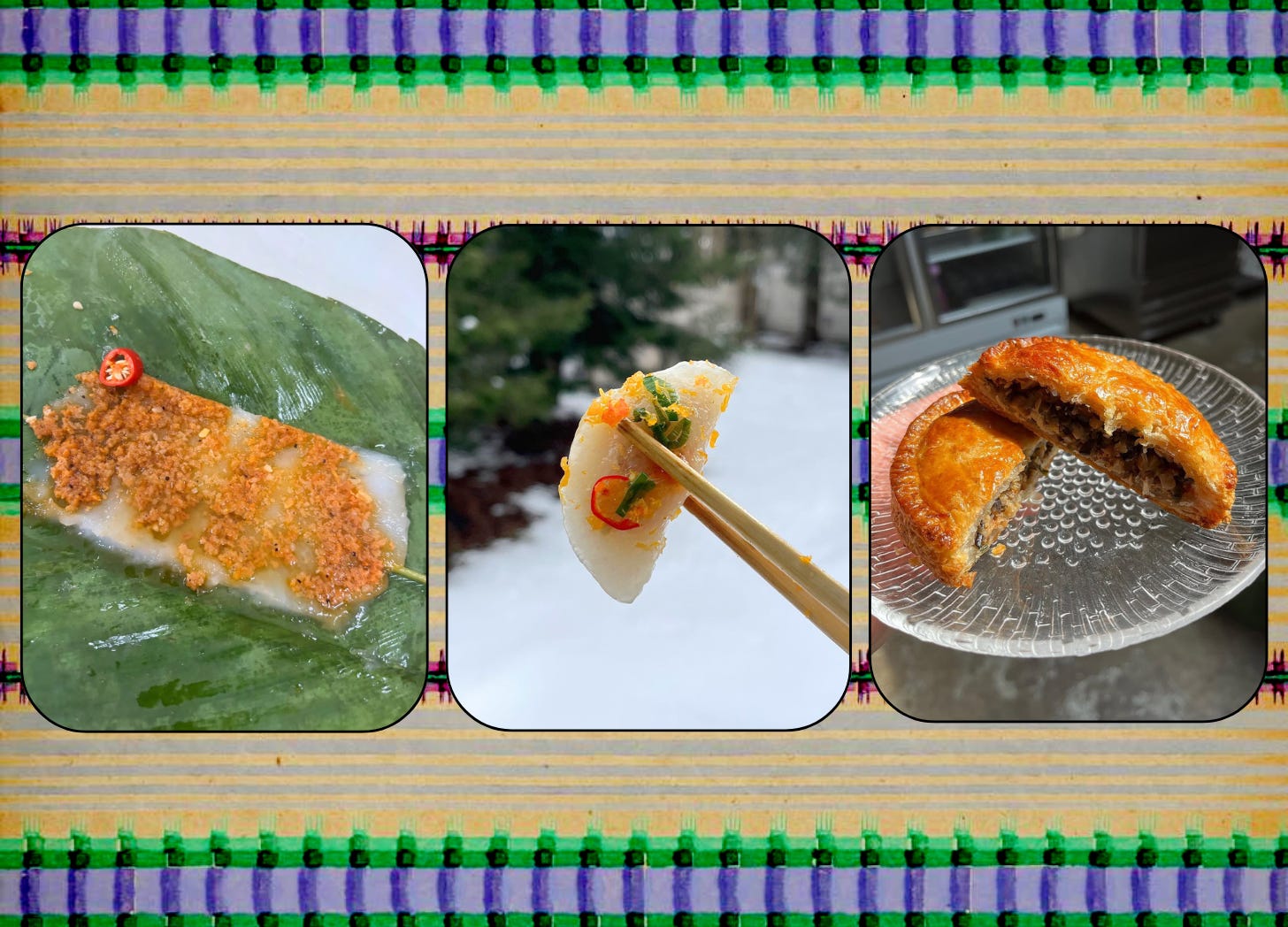
Bánh nạm is one of my favorites. It’s also steamed in banana leaf, but it’s kind of similar to a very thin tamale. You smear a rice flour on the banana leaf then you top it with little ground pieces of either dried or fresh pounded shrimp, then you wrap it, steam it, and it’s like a flat “dumpling.” I can just sit and have like 20 in one sitting. It’s so light and delicious.
I’ve also seen the viral bánh ít ram making its rounds on TikTok.
It’s always something that I wanted to test out, and it’s a dish that you don’t often see very much in restaurants. Definitely hard to find it in New York. I think maybe the reason why that is is because—especially with any central region dumpling—it’s really challenging to hone in on the recipe and scale it in a way that maintains the quality of the dumpling, the texture, and everything. These dumplings are so simple because it’s usually just three or four main ingredients, but it’s about the technique and it’s about the ratios.
There’s chè trôi nước, which is a dessert dumpling similar to tang yuan, the Chinese black sesame dumplings. It’s like a mochi, glutinous rice wrapper, usually filled with mung bean paste—sometimes fried shallots—and then wrapped, boiled, and served in a ginger syrup. Bánh bột lọc, which is a tapioca dumpling you can either find wrapped in banana leaf (which is my favorite), or you can find it wrapped as individual half moon dumplings. There’s so many.
Obviously, as a chef and culinary artist, you make so much more than just dumplings. But what would you say your relationship to dumplings is writ large?
I sadly don’t make them very much because they’re so time-consuming and require a lot of hours when it comes to testing those recipes. Someone who makes them a lot, who I love and respect, is Thư Buser (@thubuser) who makes them at her Ăn Cỗ dinner parties. I’m always so impressed at how perfect the textures are. I think it also comes with more of a pastry mindset, or someone who’s naturally a baker, which I’m not. You really need to have that kind of technical skill to do that. I think I would have to be in a kitchen very consistently testing out these recipes in order to get those dough recipes down.
I don’t even really eat them in New York because I don’t feel like there’s anywhere that I can go to get them. I just eat them when I go to Vietnam, and it’s the first thing that I eat when I land in California where I grew up.
Any core dumpling memories?
I was actually in Da Nang with my family, and they took me to a restaurant that specialized in Hue dumplings. The front of the restaurant was where people were eating, and the back of the restaurant was where their entire family was. There were the young kids, the aunties, the grandma, all sitting in chairs together. They were processing the different ingredients, like cutting the banana leaves, chopping up the shrimp with scissors. Each person was doing a small task.
I think that moment, I saw what I always knew. Cooking Vietnamese food, cooking Southeast Asian food, cooking any type of cuisine that involves so many different components and processes involves cooking in a way that is very tribal. It’s a way that is very non-Western, because you’re meant to be making these dishes with a family or with a big group of people. These types of dishes require many hands, and it’s a labor of love. Dumplings are so simple, but they involve so many different steps, processing of ingredients, and care.
This interview has been condensed and edited.
Love this Jasmine. The food obviously 🤣 but your article is wonderful